- Inventory hoarding jokes come from uncertainty about when resources will become useful.
- Dialogue and quest memes reflect the tension between player freedom and scripted outcomes.
- The strongest RPG jokes exaggerate real player behavior, from endless side quests to character-creation perfectionism.
The potion hoarder who cannot be saved
Consumables are supposed to help. Games hand you potions, scrolls, food and temporary buffs so you can survive difficult encounters. Many players respond by carefully storing them until some distant future emergency. That emergency may arrive wearing a crown, three health bars and a name printed in ominous capital letters. The items remain untouched. What if there's another fight afterward?
The joke works because every RPG player has experienced some version of resource anxiety. You don't know how many rare items you'll find later, so using one now feels wasteful. When the game finally ends with dozens of unused consumables in your inventory, the hoarding has become its own reward. Congratulations: you defeated the villain and established a thriving warehouse operation.
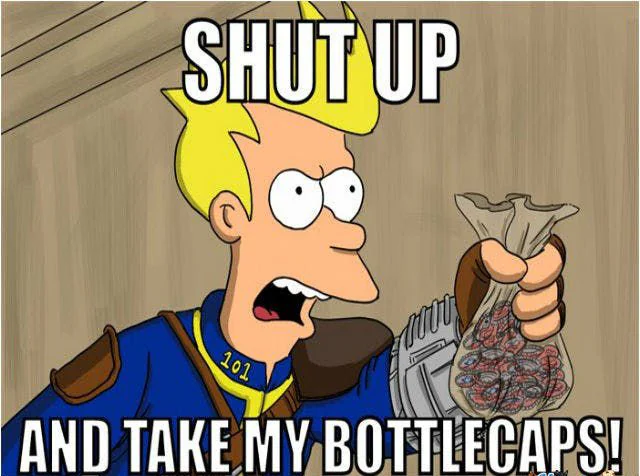
Inventory memes often pair a character standing on the brink of death with a bag full of healing items. The contrast between practical danger and irrational thrift needs little explanation. Fallout meme collections offer plenty of similarly recognizable behavior, where survival mechanics and player decision-making become an odd comedy partnership.
The side quest that eats your entire weekend
A role-playing game may tell you that the kingdom faces imminent destruction. Naturally, you spend the next eight hours helping a villager locate a missing spoon. Open worlds present competing objectives, and players develop a remarkable ability to ignore urgent narrative warnings when a new map marker appears. The dragon can wait. Someone has misplaced three cabbages.
Side-quest jokes play with a gap between story urgency and game freedom. The main narrative may insist that every minute counts, while the mechanics encourage exploration, crafting and conversation. Players notice the mismatch. A hero might arrive at the final battle after completing an extraordinary amount of unrelated community service, dressed in equipment found inside a damp cave.
The humor becomes richer when optional quests deliver memorable characters or unexpectedly elaborate plots. Players may care more about a small local problem than the grand conflict that supposedly drives the story. A meme about protecting a random merchant can carry genuine affection beneath the absurdity. RPGs invite you to choose your priorities, which means your priorities can become deeply embarrassing.
Dialogue options and the perils of choosing a sentence
Dialogue systems often promise control over your character's tone and decisions. Sometimes the choice is clear. Other times a brief prompt conceals an unexpectedly intense response. You select an option that sounds mildly skeptical, and your hero delivers what appears to be a formal declaration of war. The resulting meme usually includes a player staring in disbelief at a sentence they never meant to say.
Companion approval systems produce another familiar situation. A player tries to help a stranger, but a party member disapproves. They choose a polite answer, and somebody else disapproves. Eventually, the conversation feels like a committee hearing in which every member has brought a different grievance. Players learn to treat ordinary human interaction as an intricate tactical challenge.
These jokes also reflect genuine investment in story choices. Players replay a conversation because they want a different outcome or because a favorite companion's opinion matters to them. When a game offers branching dialogue, even small decisions can feel consequential. The comedy arrives when that emotional weight meets a menu containing answers that range from 'thank you' to 'prepare to die.'
Character creation is a game inside the game
Character editors can consume extraordinary amounts of attention. Players adjust hairstyles, facial proportions and eyebrow angles before they have seen a single enemy. The interface offers dozens of sliders, and a determined player treats each one as a matter of national importance. Two hours later, the opening cutscene reveals that the chosen lighting makes their meticulously customized hero look like somebody's exhausted uncle.
The meme usually follows a familiar pattern: enormous effort producing a barely noticeable change, or a beautiful character immediately disappearing under a helmet. Complex creation systems are fun because they offer self-expression and a chance to inhabit a distinct persona. They are also very good at encouraging the belief that another five minutes will finally fix the chin.
Sometimes the joke reverses. Players deliberately create the strangest character the editor permits, then watch dramatic scenes unfold with complete sincerity. The contrast between solemn dialogue and a spectacularly improbable face makes ordinary cutscenes newly entertaining. The game takes its hero seriously. The player has made that task unnecessarily difficult.
The suspiciously empty boss room
RPGs teach players to read environments for danger. An enormous chamber with no enemies, a convenient save point and a suspicious quantity of healing supplies practically announces that something terrible is about to happen. New players might admire the architecture. Experienced players begin checking their equipment and reconsidering the last three life choices that brought them there.
Boss-room jokes rely on learned patterns. Rest points, dramatic music shifts and unusual corridors become signals. Even when a particular game subverts those signals, the expectation itself creates tension. A character standing in front of an empty arena can be funnier than an actual fight because the audience already knows how the next few minutes usually go.
Players also joke about accidental difficulty spikes. The terrifying boss might be defeated on the first attempt, while a minor enemy in a corridor manages to eliminate the party repeatedly. The comparison is comically unfair and painfully credible. Designers can script epic battles, but a badly timed dodge against a common opponent can still deliver the day's most memorable defeat.
The build that looked brilliant on paper
Character builds create another reliable source of RPG comedy. You plan an elaborate combination of abilities, weapons and equipment, perhaps after reading a long guide explaining why every choice is essential. The first serious encounter reveals a small problem: your character can deal extraordinary damage under conditions that occur approximately once per lunar cycle. The enemies, inconsiderately, decline to cooperate with the demonstration.
Optimization jokes work because role-playing systems invite creativity and experimentation. A player can focus on damage, defense, dialogue, mobility or a highly specific trick. Sometimes an unusual build succeeds spectacularly. Other times it spends half a fight arranging the circumstances for a move that a simpler character could have performed immediately. The comparison gives communities endless material, especially when somebody has described their creation with the confidence of a person unveiling a new form of mathematics.
Tabletop role-playing adds a related tradition: the plan that collapses as soon as dice become involved. A beautifully reasoned strategy can fail on an unlucky roll, while an improvised action succeeds beyond anyone's expectations. Digital games use different rules and levels of randomness, but both formats create stories that players enjoy retelling. The joke often belongs to the moment a player's carefully constructed idea meets a system that has its own opinion.
Why RPG jokes survive different games
The language of an RPG varies between fantasy, science fiction and post-apocalyptic settings, but many player habits remain recognizable. Inventory management, quest tracking, branching dialogue and build optimization create shared situations. Someone who plays one series may understand a joke about another without knowing its character names, because they recognize the decision that led to the disaster.
Specific references add a second layer. A joke about a particular companion, spell or quest can be especially satisfying within a fandom. General RPG memes work because they focus on experiences repeated across games. Players who have never met the same fictional villain can still agree that a merchant offering twenty coins for a legendary weapon is committing an economic offense.
There's affection behind most of this humor. RPG players make fun of excessive inventory sorting because they enjoy the choices and systems that inspire it. We laugh at side-quest distractions because some of the best moments happen away from the main story. And nobody really believes they'll use every consumable at the right time. That would require a level of emotional maturity games have yet to teach us.
Sources and further reading
Background references for the history and examples discussed in this article.
- Dungeons & Dragons Basic Rules Official reference for familiar role-playing mechanics and character decisions.