- Inside jokes start with specific shared knowledge that makes one detail funny to a small audience.
- Portable words, gestures and images are easier for outsiders to reuse.
- Mainstream popularity can give a reference new meanings while obscuring its original context.
A joke begins with people who know the backstory
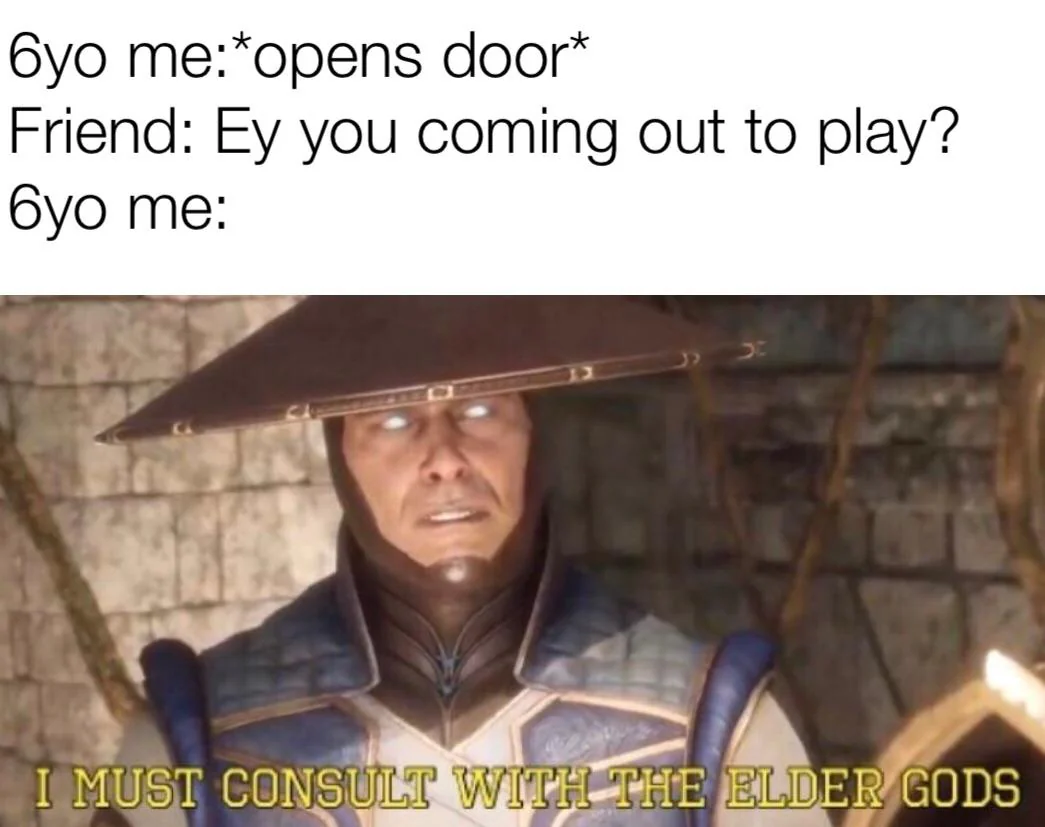
Fandom communities notice peculiar details that outsiders might miss. A non-player character repeats a strange line, a character has an unusually dramatic reaction or a game mechanic fails in a memorable way. Inside the community, those details are immediately recognizable. Nobody has to explain the setup because everybody already encountered the source. Repetition turns the reference into shared vocabulary.
That shared context makes the joke feel personal. A line might bring back the frustration of a difficult quest or the excitement of discovering a secret area. People quote it to signal membership, and the quotation can be funny even when it appears in an ordinary conversation. Someone who recognizes the reference enjoys both the new situation and the memory it unlocks.
The problem for a joke trying to escape the fandom is that strangers lack the original context. A lengthy lore explanation rarely makes a quick reaction funnier. Successful references solve this by attaching themselves to familiar situations: failure, surprise, overconfidence or mild irritation. The meaning becomes readable even if the reader has never met the character who first supplied the line.
A Skyrim guard demonstrates the power of a reusable sentence
In The Elder Scrolls V: Skyrim, guards repeat a line about once being adventurers until an arrow injured a knee. The phrase became an online joke partly because players encountered it frequently. Repetition made the line memorable, and the sentence offered a convenient structure for substitutions. Somebody could describe almost any abandoned ambition by replacing the first half of the statement.
Know Your Meme documents the history of the Skyrim line and the variations that followed its 2011 appearance. The sentence spread because it was easy to adapt. You could use the structure to discuss hobbies, work, travel or cooking without knowing much about the fictional guard. The joke's template did the translating.
Once the phrase escaped, people used it as an independent figure of speech. Some knew the exact game, while others recognized only the familiar sentence shape. Its origin remained part of its charm, yet understanding the joke no longer required a copy of Skyrim. The guard had accidentally become a writing instructor, specializing in disappointed life plans.
One letter travels even farther
Call of Duty: Advanced Warfare included a funeral scene prompting players to press a button to pay respects. The PC version's 'F' became an especially memorable detail. Players mocked the awkward interaction, then began using 'F' as a compact response to unfortunate events online. The letter acquired a meaning far beyond the original scene.
The history of Press F to Pay Respects traces the connection between the 2014 game prompt and later reaction formats. Stream chats used the expression after failed attempts or disappointing news. Some uses were ironic, others closer to genuine sympathy. The context determines whether the letter reads as a joke, an acknowledgement or a slightly clumsy expression of support.
This is an unusually efficient form of translation. The original scene required a game, a funeral cutscene and a peculiar interactive command. The mainstream version needs one character. A person can encounter 'F in chat' for years without knowing where it came from. The source material has been compressed so thoroughly that even the packaging disappeared.
Gestures are easier to recognize than plot summaries
Words are one route out of a fandom. Visual gestures offer another. The arms-back Naruto run communicates an anime reference through a pose that almost anyone can imitate. A viewer can recognize the movement even if they cannot name the episode. That makes it easy to film, remix and adapt to a new setting without obtaining a clear screenshot.
The Naruto meme history shows how a specific visual reference can appear in school videos, event jokes and unrelated social posts. The gesture works as a punchline because the audience sees an ordinary person behaving as though they belong in an intense animated action sequence. The contrast does most of the comic work.
Visual jokes still change with audience familiarity. A fan may appreciate the exact reference, while somebody outside the fandom simply sees an absurd running style. That broader reading allows the format to travel. It also means some viewers mistake a popular imitation for the origin. When documenting the joke's history, distinguish the first source from later clips that introduced it to a wider audience.
Clips and captions remove the entry fee
A long story becomes easier to share when one moment can stand alone. A recording captures timing, character voices and immediate reactions. A caption gives newcomers enough context to understand what went wrong. Social feeds make both formats quick to encounter. The original audience may be small, but the new presentation can reach people who don't share its history.
Gaming offers plenty of naturally readable situations. Someone celebrates too early. A team ignores a sensible plan. A character says something so oddly phrased that it sounds like a reaction to everyday life. Those moments don't need much explanation. The evolution of gaming memes shows how changing platforms made this kind of circulation easier.
Context loss creates problems too. A heavily edited clip can make a scene seem different from its original recording. Captions may attribute dialogue to the wrong character or combine moments from separate events. When a joke becomes popular enough, people can confuse a parody with the source. A short note identifying the original scene is helpful, especially in an explanatory article.
The audience starts making the joke about itself
Once a reference is recognizable, creators can joke about the reference's popularity. A person posts an old line with a deliberately unexpected caption. Someone else complains that the line is overused. Another person responds by using it again. The original subject has become secondary to the community's shared awareness of the format. The joke is now partly about knowing everybody else knows it.
Mainstream exposure can also change the emotional tone. An image used affectionately inside a fandom might become sarcastic in a larger discussion. A phrase originally mocking an awkward scene may turn into a sincere reaction. Different audiences maintain different interpretations at the same time. Meaning becomes a moving target, which is why explaining one fixed definition often feels inadequate.
Some fans dislike seeing a favorite reference flattened into generic content. Others enjoy discovering that their small community's joke has become common language. Both reactions make sense. A familiar phrase creates a sense of connection. Excessive repetition can drain it of the details that made it special. The internet is capable of preserving a joke and wearing it out simultaneously.
What gives an inside joke a long second life?
The strongest candidates tend to be portable. A short phrase, clear expression or distinctive motion can be adapted without extensive background knowledge. The reference also benefits from repeatable situations. People will keep making regrettable choices, celebrating prematurely and reacting to disappointing outcomes, providing familiar contexts for old formats.
Community creativity matters as much as the original scene. Fans make edits, introduce the joke to friends and find new uses. Later audiences add their own captions, making the reference relevant to entirely different conversations. A game developer may create the original character, but nobody can predict every joke players will make with that character's accidental expression.
Fandom inside jokes become mainstream when strangers can recognize what the format communicates, even if they don't know the entire backstory. Learning the origin can then add another layer of appreciation. You might discover that the phrase you use after a disastrous Monday came from a guard in a fantasy game. The guard is still on duty somewhere, waiting to tell another adventurer about his knee.
Sources and further reading
Background references for the history and examples discussed in this article.
- Know Your Meme, I Took an Arrow in the Knee Documented development of Skyrim's reusable catchphrase.
- Dot Esports, The Origin of Press F to Pay Respects Reporting on the Call of Duty scene and its later use in streaming culture.