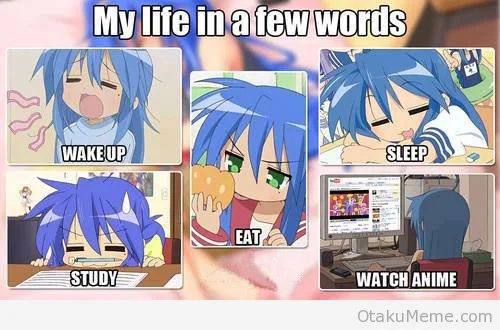
- Anime and cartoon reactions share visual exaggeration but can suggest different kinds of timing and intensity.
- Recognizing a character's original scene adds humor without being essential for every reaction.
- The strongest image fits the conversation and remains readable when reduced to chat size.
Both styles exaggerate, but they exaggerate different things
Animation makes human feelings visible in ways live action cannot easily reproduce. Eyes become enormous, faces distort and ordinary movements turn into theatrical events. Anime and Western cartoons both use those techniques, although individual shows have different visual traditions. A subdued anime drama may offer fewer explosive expressions than an energetic slapstick cartoon. Style follows creators' goals, making broad labels useful starting points, with exceptions.
Anime reactions often draw on sharply composed facial close-ups, dramatic pauses and abrupt shifts in emotional intensity. Western cartoon reaction images frequently exploit broad physical comedy, elastic poses or recognizably exaggerated silhouettes. Those are tendencies readers might encounter, not boundaries that every series obeys. Trying to classify every frame would require a taxonomy department, and nobody should have to submit paperwork before sending a funny picture.
The choice changes the tone of the reply. A solemn anime stare can make a minor problem feel momentous. A rubbery cartoon grimace can make the same problem feel ridiculous. Both can express disbelief, yet they direct attention toward different parts of the situation. One invites the viewer into the character's suffering. The other invites everyone to appreciate how impressively the situation has gone wrong.
The still frame carries the original scene's timing
Animation works through movement and rhythm, but reaction images freeze one moment. A frame from a scene with a slow buildup can preserve the tension of an impending revelation. A still from a fast-paced cartoon chase may capture the exact second before an impact. Even without the surrounding sequence, the picture suggests a particular kind of timing.
Consider a character staring silently after hearing bad news. The expression can work as a delayed response to a surprising message, especially if the conversation has already paused. Now consider Tom from Tom and Jerry realizing he's about to be struck by something heavy. That image suits a sudden reversal or an avoidable disaster. One feels like a long exhale. The other sounds like the universe dropping a saucepan.
The same scene can still be repurposed. An anime character sprinting in panic may communicate physical slapstick. A cartoon character staring blankly at the viewer may feel remarkably deadpan. The interesting question is what the individual frame tells the reader before they read the accompanying caption. Animation style influences that first impression, but the face and situation finish the job.
Recognizable characters make the joke richer
Viewers bring memories to reaction images. A fan recognizes a character's temperament, a famous catchphrase or an unusually dramatic episode. That history changes how the reply lands. A perpetually confident character looking defeated can be especially funny because fans know the pose is unusual. Someone outside the fandom may simply see an exhausted face, which is still enough for a useful reaction.
Cartoon icons benefit from broad recognition. Tom and Jerry memes can communicate a chase, a trap or a deserved reversal without requiring detailed story knowledge. Anime frames sometimes reward more specific knowledge of characters and relationships, yet popular expressions can achieve the same broad readability. Familiarity isn't evenly distributed by medium. It depends on the particular audience.
A character's original context can also complicate the joke. A scene intended as tragic may be circulated as comedy, while a cartoon's slapstick injury may be used to describe a genuine disappointment. Some viewers enjoy that contrast. Others may find the reuse insensitive when the original material concerns a serious subject. A good reaction respects both the conversation and the material it borrows.
When a caption becomes a second performance
Captions can sharpen the emotion by giving the image a new situation. Picture an anime character staring toward the horizon, paired with a line about opening a spreadsheet after a long weekend. The frame supplies drama. The caption supplies a situation whose modest stakes make the drama funny. You can use the same technique with a cartoon character staring at a broken object after someone claims they have fixed it.
Other jokes rely on the picture alone. A character visibly recoiling can answer a disturbing suggestion without any words. An elaborate caption would only slow the moment. The best response is often one that trusts viewers to understand what they can already see. There's no need to label an eye roll 'my eyes rolling' unless the real joke concerns the sender's dedication to unnecessary documentation.
Some templates use labeled characters or objects to explain relationships. A cartoon chase can assign roles to the pursuer and pursued. An anime confrontation can depict competing moods or opinions. The format becomes readable when each label describes a clear part of the situation. Too many labels turn the scene into a flowchart assembled by somebody who has recently discovered clip art.
The right audience changes the meaning
An anime-heavy group chat may treat a particular frame as common vocabulary. Members know the characters and the situations they represent. Send the same image to a family chat, and people might understand the emotion while missing the reference. A widely recognized cartoon image can have the opposite advantage in that setting. Popularity is local: what feels universal in one server may be an unsolved riddle next door.
Inside jokes deepen that effect. A group may use a specific anime face to remember somebody's disastrous game night or a cartoon chase to refer to the friend who always arrives late. The images gain private meanings that have very little to do with their source shows. In time, the chat develops a collection of visual nicknames for its members. New arrivals are given an informal induction that resembles studying a very strange local history.
That is why anime expressions in group chats are as much about shared expectations as visual design. A reaction is a social choice. The sender decides which feeling to display, how much teasing is appropriate and whether the intended recipient will enjoy the reference. Technical image quality can help, but it cannot rescue a joke aimed at the wrong person.
Practical examples: the same moment, two different reactions
Imagine a friend saying they have lost all their progress in a game. An anime character collapsing into dramatic despair emphasizes how devastating the loss feels. A cartoon character being launched through a wall emphasizes how ridiculous the accident was. Both reactions may fit, depending on whether the group is sympathizing or laughing at a preventable mistake. The picture determines which emotion takes center stage.
Now imagine somebody announcing that they are about to try a risky strategy. An anime character's intense, heroic pose can exaggerate the confidence behind the plan. A cartoon character preparing an obviously defective contraption can suggest the plan is about to fail. Similar setup, different expectation. The joke becomes sharper if everybody has already watched this person attempt something equally ill-advised before.
Finally, consider a long, complicated message that nobody has understood. A blank anime stare communicates mental exhaustion. A cartoon character studying a confusing diagram suggests that the information itself is chaotic. You can choose the expression based on whether the reader's bewilderment or the original message deserves the comic emphasis. Both are frequently excellent candidates.
Choose a reaction before choosing a fandom
Start by identifying the emotional response you want to send. Is this mild disbelief, open admiration, affectionate mockery or sheer confusion? Look for an expression that remains readable at small size. Then consider the recipient. If the image requires deep knowledge of a show they have never seen, find one that communicates the mood clearly without that knowledge.
An easy test is to imagine the image arriving without a caption. Would the reader understand the broad feeling? Next, look at the preceding message. Does the reaction match its tone and timing? A spectacularly intense frame can be funny in a silly conversation and strangely inappropriate in a serious one. The best format respects the surrounding exchange.
Anime and cartoon reactions offer different visual vocabularies, with plenty of overlap and individual exceptions. You don't need to crown one superior. A successful picture gives the other person the intended feeling quickly and leaves enough room for a laugh. If choosing between two takes longer than writing the response yourself, the meme has perhaps become a little too much of a hobby.
Sources and further reading
Background references for the history and examples discussed in this article.
- Know Your Meme, Reaction Images Background on reaction-image conventions across media.